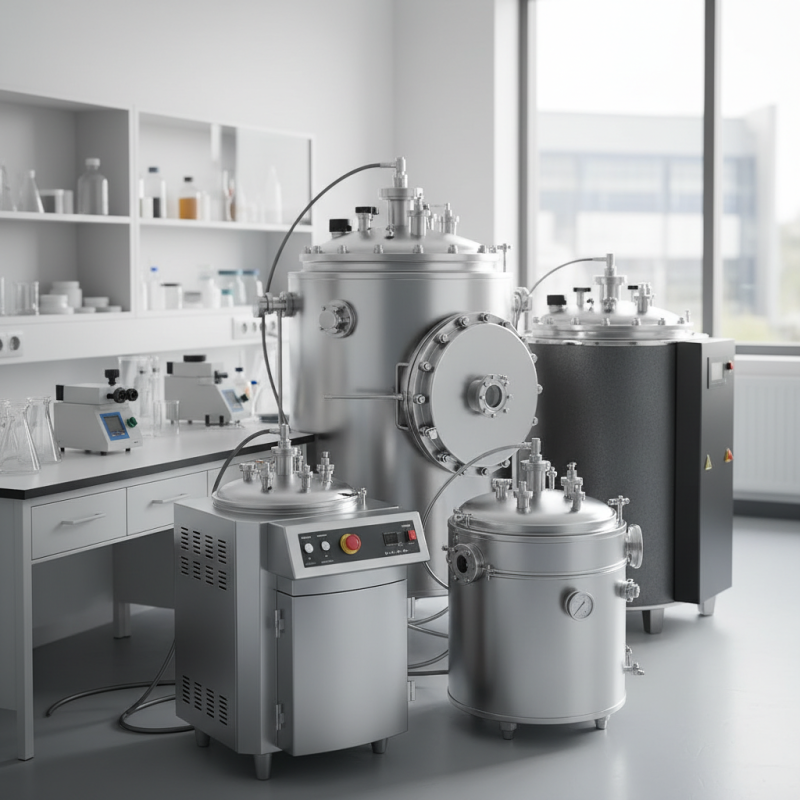
How to Choose the Right Autoclave Vessel for Your Needs?
Choosing the right Autoclave Vessel is essential for effective sterilization. Different industries require different specifications. An autoclave must meet your needs precisely.
Consider the size of the vessel. Smaller units are suitable for labs with limited space. Larger vessels can accommodate bigger loads, but they also require more energy. Think about what fits your workflow best.
Materials of construction are another key point. Stainless steel is common, but other options exist. Some materials resist corrosion better. Assess your requirements carefully. Remember, the ideal autoclave vessel may not be the most expensive one. Reflect on what truly serves your purpose.
Understanding the Different Types of Autoclave Vessels Available
When selecting an autoclave vessel, understanding the different types is crucial. Generally, there are two main types: horizontal and vertical autoclaves. Horizontal vessels are often preferred for larger loads. They allow for easier loading and unloading. Vertical autoclaves, on the other hand, take up less floor space. They are suitable for smaller operations.
Research from the American Society for Microbiology indicates that effective sterilization depends on proper selection. A study found that nearly 20% of users reported inefficiencies in their sterilization processes. Many of these inefficiencies arise from the mismatch between the vessel and actual needs. For instance, using a vertical autoclave for bulk items could lead to incomplete sterilization.
Temperature and pressure parameters also vary significantly across models. Additionally, some vessels allow for advanced features such as programmable cycles. Yet, many users overlook these features. This can lead to frustration and ineffective sterilization. Understanding specific needs can greatly enhance operational efficiency.
Key Factors to Consider When Selecting an Autoclave Vessel
Choosing the right autoclave vessel is crucial for effective sterilization. Start by assessing your specific needs. The size of the vessel is a primary consideration. It should accommodate your equipment without overcrowding. A vessel that is too small may lead to uneven sterilization.
Consider the material of the vessel as well. Stainless steel is common due to its durability. However, not every process requires it. Some applications might work well with glass. Keep in mind that glass vessels can be more fragile.
**Tip:** Always think about how often you will use the autoclave. If you plan to use it daily, durability matters. A well-constructed vessel can save you money over time.
Think about the complexity of the load as well. Simple items may not require advanced features. If you sterilize complex instruments, consider a vessel with more control options. You want to ensure effective sterilization every time.
**Tip:** Regularly review your processes. This helps identify if your selected vessel meets your evolving needs. It is common for facilities to overlook this aspect, leading to inefficiencies.
Assessing the Size and Capacity Requirements for Your Needs
Choosing the right autoclave vessel requires careful assessment of size and capacity. Think about what you will be sterilizing. Will it be small tools or larger equipment? This affects the size you need. A vessel that is too small may not fit all your items. On the other hand, an oversized vessel may waste energy and space.
Consider your workflow. How many items do you process daily? If you have a high volume, select a vessel that can handle multiple loads. It prevents delays and increases efficiency. However, a larger capacity doesn’t mean it fits all types of items equally well. Some designs may restrict how items are stacked, leading to uneven sterilization.
Reflect on your available space too. A large autoclave requires adequate room for safe operation. Some facilities underestimate the space needed for access and maintenance. Be aware that compressors or electrical setups may need additional room. It’s crucial to visualize the entire process from loading to unloading before making a final choice.
Evaluating Material Options for Autoclave Vessels
When selecting an autoclave vessel, material choice is crucial. Stainless steel is often favored for its durability. It withstands high temperatures and pressures. However, it can be heavy and more expensive. Consider lightweight materials such as aluminum. Aluminum vessels are easier to handle but may have lower temperature resistance. Balance the pros and cons carefully.
Another option is glass. Glass provides excellent visibility for monitoring contents inside. Yet, it is fragile and may not be suitable for every application. In specific industries, glass can falter when faced with extreme conditions. Reflect on how your environment might impact the material you choose.
Don’t overlook composite materials. They offer unique properties like corrosion resistance and lightweight design, making them appealing. However, composites can be complex in terms of maintenance. Evaluate your specific needs and long-term goals. It’s easy to focus on immediate benefits while ignoring future challenges. Choose wisely, as the right material affects both safety and performance.
Determining the Budget and Cost Considerations for Autoclaves
When considering an autoclave vessel, budgeting is vital. The initial cost can vary greatly. Smaller, basic models may cost less but might lack features. Larger, more advanced units often provide better efficiency but at a higher price. It’s wise to assess your needs closely before making a decision.
Don’t forget about operating costs. Maintenance is not just an afterthought; it can add up. Replacement parts and energy use are also significant. Consider how often you’ll need to run the autoclave. If your operation is high-volume, investing in durability might be essential. However, if the usage is low, a less expensive option could suffice.
It’s easy to underestimate the total cost. Many overlook additional accessories that could be needed. Training staff to use the autoclave properly also requires consideration. All these aspects can impact your budget in unexpected ways. Reflecting on these factors will help ensure a wise investment.
How to Choose the Right Autoclave Vessel for Your Needs? - Determining the Budget and Cost Considerations for Autoclaves
| Autoclave Type | Capacity (Liters) | Price Range (USD) | Ideal Use Case |
| Benchtop Autoclave | 10 - 20 | $3,000 - $7,000 | Laboratories with limited space |
| Vertical Autoclave | 20 - 100 | $5,000 - $15,000 | Research institutions and hospitals |
| Horizontal Autoclave | 100 - 500 | $15,000 - $50,000 | Large-scale production and sterilization |
| Tabletop Autoclave | 5 - 10 | $2,500 - $4,500 | Dental and small clinics |
| Large Pressure Cooker Autoclave | 100 - 300 | $10,000 - $25,000 | Food preservation and testing |