Blog
How to Choose the Right Gate Valve for Global Sourcing?
Choosing the right gate valve for global sourcing requires more than comparing prices on a supplier website. The valve must match the pipeline’s medium, pressure, temperature, connection type, and operating frequency. A valve designed for clean water may fail quickly in abrasive slurry or corrosive chemical service. Small details matter.
Experienced purchasing teams normally review body materials, seat design, stem construction, pressure class, and applicable test requirements. They also check whether the manufacturer can provide traceable material certificates, pressure-test reports, drawings, and consistent inspection records. Do not rely only on attractive product photographs. A practical review may include factory audits, sample testing, video inspections, and verification of packing methods. Wooden crates, protective caps, and moisture control can prevent damage during a long ocean shipment.
Supplier location also affects lead time, communication, spare parts, and after-sales support. The lowest quoted cost may become expensive after delays, rework, customs issues, or unavailable replacement parts. Compare the complete sourcing cost instead. Include freight, inspection, documentation, installation, and maintenance.
No method is flawless. A detailed checklist can still miss a field condition. For this reason, involve engineers, quality inspectors, and local operators before approving the order. Their experience may reveal problems hidden in technical data sheets. Ask clear questions, record every assumption, and request written confirmation. A reliable gate valve is not simply the cheapest acceptable option. It is the one that performs safely, arrives correctly documented, and remains serviceable throughout its expected working life.
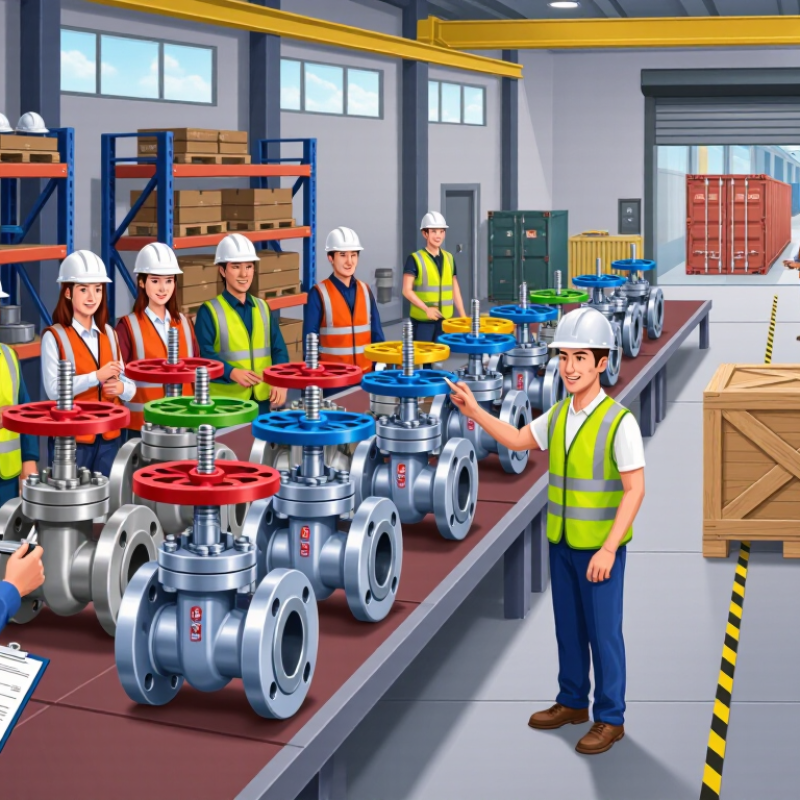
Define the Valve’s Purpose, Pressure Rating, and Flow Requirements
How to Choose the Right Gate Valve for Global Sourcing?
Define the valve’s purpose before comparing quotations. A gate valve normally isolates a pipeline, rather than regulating flow continuously. It works well when fully open or fully closed. Using it for frequent throttling can damage the seat and shorten service life. Specify the fluid, temperature, operating cycle, and installation position. Water, steam, chemicals, and abrasive slurries require different body, trim, and sealing materials.
Pressure rating needs careful review. Do not choose a class from pipeline size alone. Check the maximum working pressure at the actual operating temperature. Ask suppliers for pressure-temperature charts, shell-test results, seat-test records, and material certificates. Flow requirements also deserve attention. Confirm line diameter, expected flow rate, allowable pressure drop, and connection dimensions. A larger valve may seem safer, but it can increase cost and create poor low-flow control. That assumption is easy to miss.
Tips: Prepare a short technical data sheet before requesting offers. Include fluid details and peak conditions. Request dimensional drawings and inspection records. Compare the complete specification, not only the unit price. Verify packing materials and actuator torque where applicable. A small detail, such as an incompatible gasket, can delay installation and raise sourcing costs.
Choose the Appropriate Gate Valve Design and Wedge Configuration
Choosing the right gate valve for global sourcing starts with wedge configuration, not price. The valve must match pressure, temperature, fluid behavior, and isolation frequency. A solid wedge suits many general services and tolerates moderate installation misalignment. However, thermal expansion can increase seat loading. A flexible wedge reduces this risk through controlled deformation. It is often better for steam and changing temperatures.
A split wedge can handle minor seat alignment differences, but its internal parts require careful inspection. Parallel-slide designs work well for certain high-temperature services and frequent thermal cycling. They are not automatically suitable for every pipeline. Rising-stem designs provide visible position feedback, while non-rising stems save space but hide travel condition. For critical systems, specify body material, trim, bonnet type, pressure class, and test requirements under recognized standards such as API 600, API 598, and ASME B16.34.
Energy data also affects selection. The U.S. Department of Energy’s Improving Pumping System Performance sourcebook reports that pumping systems can represent 25% to 50% of industrial electricity use. A gate valve should isolate flow, not regulate it. Partial opening can create turbulence, vibration, and seat damage. That detail is often missed.
Field documentation matters. Request material certificates, pressure-test records, dimensional drawings, and traceability documents before shipment. One imperfect assumption can become a costly mismatch. I would also challenge the common habit of selecting a flexible wedge by default. Service conditions decide the design; catalog familiarity does not.
How to Choose the Right Gate Valve for Global Sourcing? - Choose the Appropriate Gate Valve Design and Wedge Configuration
| Valve Design / Wedge Configuration | Typical Construction | Main Advantages | Important Limitations | Best-Fit Applications | Common Specification References |
|---|---|---|---|---|---|
| Outside Screw and Yoke (OS&Y) with Flexible Wedge | Rising stem; the stem moves upward as the valve opens. A flexible wedge uses a one-piece disc with a controlled central flexibility. | Clear visual position indication; reduced risk of wedge binding caused by body-seat distortion; suitable for many industrial pressure services. | Requires additional installation height; exposed threads need protection and maintenance in corrosive or dirty environments. | Steam, water, hydrocarbons, power generation, refining and general process piping. | API 600; ASME B16.34; ASME B16.10; API 598. |
| Non-Rising Stem (NRS) with Resilient Wedge | The stem rotates without moving vertically. The wedge is usually metal-encapsulated or coated with an elastomeric material. | Compact vertical envelope; resilient seating can provide reliable bubble-tight shutoff for clean water service; protected stem threads. | The valve position is not directly visible from stem height; elastomer selection limits temperature and chemical compatibility. | Potable water, raw water, irrigation, fire-protection and buried or space-constrained pipelines. | AWWA C509; AWWA C515; relevant potable-water approval requirements. |
| OS&Y with Solid Wedge | A solid wedge moves between two body seats and is operated by a rising stem. | Simple and robust design; suitable for a broad range of standard shutoff duties; visible stem position. | More sensitive to thermal expansion, piping strain and body-seat alignment than a flexible wedge; may be unsuitable for severe temperature cycling. | General industrial isolation, utility lines and services with relatively stable operating temperatures. | API 600; ASME B16.34; API 598. |
| Double-Disc Parallel-Slide Gate Valve | Two parallel discs are pushed against the seats by internal springs or line pressure, depending on the design. | Low wedging forces; can accommodate certain thermal movements; useful where a full-bore, low-pressure-drop passage is required. | Not normally selected for throttling; sealing performance depends on correct orientation, pressure conditions and seat design. | Steam, boiler and process isolation duties where the design is qualified for the specified pressure and temperature range. | API 600; ASME B16.34; project-specific design and testing requirements. |
| Slab Gate Valve | A single flat gate travels between parallel seats, commonly with a through-conduit bore in pipeline designs. | Full-bore flow path; suitable for pipeline isolation and, in qualified designs, pigging operations; low turbulence when fully open. | Requires clean, compatible service and correct pressure-relief or cavity-pressure management; not intended for flow regulation. | Oil and gas transmission, gathering systems, terminals and pipeline block-valve stations. | API 6D; ISO 14313; ASME B16.34. |
| Expanding Gate Valve | The gate expands mechanically or through a cam-and-segment mechanism to create positive contact with both seats. | Provides tight mechanical isolation when correctly selected; commonly used where double-blocking capability is required by the project design. | More complex internal mechanism; higher procurement, inspection and maintenance requirements than basic wedge designs. | High-integrity isolation, wellhead, pipeline and process applications requiring specific isolation performance. | API 6D; ISO 14313; API 6FA or project fire-test requirements where applicable. |
| Knife Gate Valve | A thin plate-like gate travels through the medium and is often available with a rising or non-rising stem. | Can cut through or isolate slurries, fibrous fluids and solids-bearing media; generally compact in the flow direction. | Seat leakage, wear and flow-direction limits vary significantly by design; many models are not suitable for high-pressure services. | Pulp and paper, mining slurry, wastewater, ash handling and bulk-solids services. | MSS SP-81; EN 1171; manufacturer or project-specific slurry-service requirements. |
Match Materials to the Fluid, Temperature, and Operating Environment
How to Choose the Right Gate Valve for Global Sourcing?
Material selection starts with the fluid, not the purchase price. Water, steam, acids, oxygen, and abrasive slurries demand different internal materials. Carbon steel may suit dry service, but chlorides can accelerate pitting. Stainless steel improves resistance, although it is not automatically safe for every chemical. The NACE IMPACT study estimated global corrosion costs at US$2.5 trillion annually, equal to about 3.4% of global GDP. That figure makes material verification more than a technical preference.
Temperature changes everything. High heat can weaken seals, alter clearances, and increase packing leakage. Cryogenic service requires materials that remain tough below freezing. Check the valve body, stem, seat, gasket, and packing separately. They may face different stresses. Operating pressure, cycling frequency, outdoor exposure, and installation altitude also matter. A valve rated for the fluid may still fail in a hot, salty, or dusty environment. That detail is often missed.
Tips: Request a complete material certificate and pressure-temperature chart. Confirm chloride levels, solids content, and expected temperature peaks. Ask for testing records, not only catalog claims. I have seen projects choose a cheaper valve, then discover incompatible seals during commissioning. The uncomfortable lesson is simple: standard specifications can hide local operating realities. When uncertain, involve a corrosion engineer before issuing the global purchase order.
Evaluate Standards, Certifications, Actuation, and Maintenance Needs
Choosing the right gate valve for global sourcing requires more than comparing prices. Start by checking the required design and testing standards, such as API 600, API 598, or ASME B16.34. The correct standard depends on pressure, temperature, fluid type, and installation location. Certification documents should include material certificates, pressure test reports, and traceability records. Look for a controlled quality system, such as ISO 9001. However, a certificate alone proves little. Ask for batch numbers, inspection records, and recent test evidence.
Actuation needs careful calculation. A handwheel may suit a small, rarely operated valve, while larger valves often need electric, pneumatic, or hydraulic actuation. Confirm operating torque under maximum differential pressure, not only normal conditions. Check whether the actuator needs a fail-open or fail-closed position. Cable entries, control signals, and local climate also matter. A humid coastal site can expose weak protection quickly.
Maintenance planning should begin before purchase. Request drawings showing bonnet access, stem clearance, packing adjustment, and replacement parts. Keep practical spares, including gaskets, packing, bolts, and handwheel components. I once saw a valve remain unused because its actuator adapter did not match the site connection. That mistake was avoidable. Suppliers should explain inspection intervals and provide clear maintenance instructions. Still, operating conditions can change, so the original selection deserves review after commissioning.
How to Choose the Right Gate Valve for Global Sourcing?
Use the applicable standards as a sourcing checklist: ASME B16.34 addresses pressure-temperature ratings and design requirements, API 600 covers bolted-bonnet steel gate valves, API 598 covers inspection and pressure testing, EN 1074-2 applies to isolating valves for water-supply systems, and ISO 5210 defines multi-turn actuator attachment interfaces.
A value of 1 indicates that the standard is directly relevant to the procurement criterion; 0 indicates that it is not the primary reference for that criterion. Always confirm the exact edition, material, pressure class, service medium, and regulatory requirements before purchase.
Compare Global Suppliers, Total Costs, Lead Times, and Quality Controls
Choosing the right gate valve requires more than comparing unit prices. For a DN150, Class 300 valve, specify body material, trim, pressure rating, and operating temperature clearly. Compare at least three qualified suppliers. Request production capacity, recent inspection records, and references for similar projects. The World Bank’s 2023 Logistics Performance Index covered 139 economies and showed significant differences in logistics reliability. That gap changes real lead times. UNCTAD’s 2023 maritime report states that over 80% of global trade by volume moves by sea. Port congestion, transshipment, and customs handling deserve separate cost lines.
Build a total-cost sheet, not a quotation table. Include tooling, third-party inspection, freight, duties, inventory, installation, and possible failure costs. McKinsey’s 2022 supply-chain survey reported that 72% of respondents experienced serious disruption. A low-price valve may create expensive downtime. It happens. Separate manufacturing time from testing, document approval, packing, and shipping buffers. For quality control, request material certificates, heat-number traceability, hydrostatic test records, and leakage results aligned with ISO 5208. API 600 and ASME B16.34 can support technical comparisons, where applicable. Audit critical suppliers remotely or onsite, and verify calibration certificates. A spreadsheet can still lie. Exchange rates, rejected batches, and delayed approvals are often underestimated. Supplier scoring should therefore weight quality consistency, lead-time reliability, communication, and total landed cost—not price alone.