What is Glutamic Acid Residue and Its Importance in Proteins?
glutamic acid residue is a vital component of proteins. It plays a significant role in many biological processes. This amino acid is critical for protein structure and function.
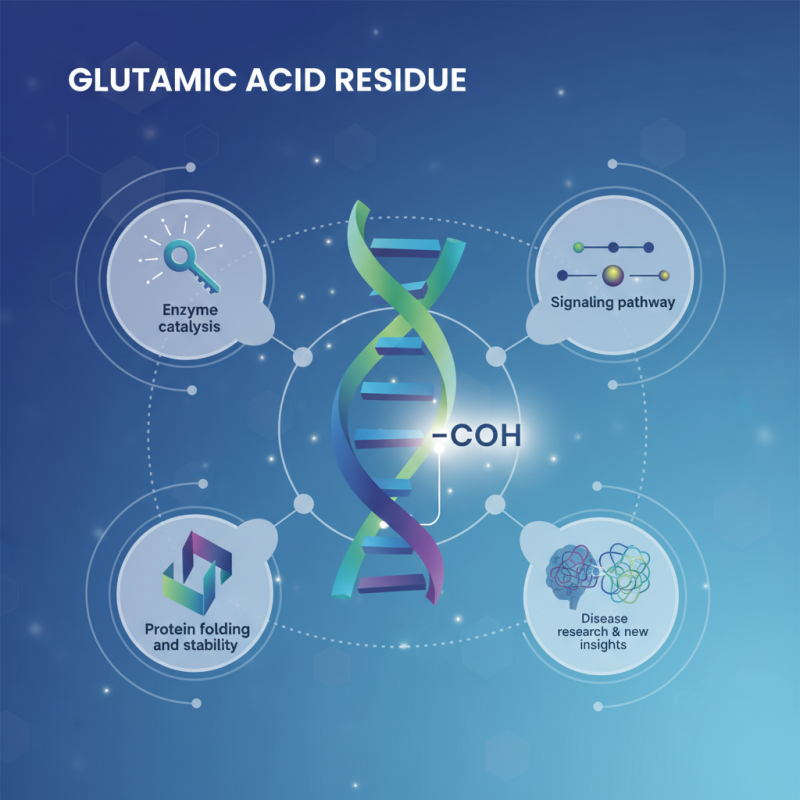
In proteins, the glutamic acid residue contributes to stability and activity. Its side chain can participate in enzyme catalysis and signaling pathways. This residue can also influence protein folding. Overall, it shapes the behavior of proteins in cells.
Understanding glutamic acid's role leads to insights in biochemistry. Researchers study its implications in diseases. However, there’s still much to learn about its complexities. The unique properties of glutamic acid residue challenge our current knowledge and inspire new research.
Definition of Glutamic Acid Residue in Proteins
Glutamic acid residue plays a crucial role in proteins. It is one of the twenty standard amino acids found in nature. In proteins, this residue comes from glutamic acid after the formation of a peptide bond. Its side chain contains a carboxyl group, giving it unique chemical properties.
This residue is charged at physiological pH, contributing to protein stability. Its polar nature allows it to form hydrogen bonds, affecting protein folding. Additionally, glutamic acid residue is involved in enzyme activity and signal transduction. These functions are vital for many biological processes.
Understanding its significance can be challenging. The biochemical pathways that include glutamic acid are complex. Often, its involvement is overlooked in studies. This highlights the need for further research to appreciate its full impact on protein function.
Role of Glutamic Acid Residue in Protein Structure
Glutamic acid residue plays a crucial role in protein structure. This amino acid influences how proteins fold and function. Its side chain can engage in various interactions, impacting stability. It often forms salt bridges and hydrogen bonds, enhancing structural integrity.
Tips: Understanding protein folding basics can illuminate glutamic acid's function. Explore how its charge changes in different pH levels. A simple experiment involves adjusting pH in solutions to see solubility variations.
The presence of glutamic acid can also lead to challenges. Overabundance might cause misfolding or aggregation. This underlines the importance of balance in protein composition. Regulating glutamic acid levels is essential for maintaining proper protein functions. Observing these patterns can help in research and applications in biotechnology.
Functions of Glutamic Acid Residue in Cellular Processes
Glutamic acid residue plays a vital role in cellular processes. This amino acid is involved in protein structure and function. It contributes to enzyme activity and neurotransmission. Glutamic acid acts as a neurotransmitter. It helps send signals in the brain. This signaling influences learning and memory.
In proteins, glutamic acid often finds itself in active sites. It participates in catalyzing reactions, sometimes helping in energy production. Its negative charge can stabilize protein structures. However, an excess of glutamic acid can lead to problems. It can cause overstimulation of neurons, resulting in harmful effects.
The balance of glutamic acid in cells is crucial. Too little may impair function. Too much can be toxic. This delicate equilibrium in cellular processes requires constant attention. Understanding these aspects prompts further research. Insights here can pave the way for discoveries in health and disease management.
Importance of Glutamic Acid Residue in Cellular Processes
Impact of Glutamic Acid Residue on Protein Interaction and Stability
Glutamic acid residue is more than just a building block in proteins. It plays a crucial role in protein interaction and stability. This amino acid has a carboxyl group that can form hydrogen bonds. These bonds are essential for maintaining protein structure. The presence of glutamic acid helps stabilize the overall protein conformation. Yet, its effects can be unpredictable.
In protein interactions, glutamic acid can influence binding affinity. Sometimes, it enhances interactions with other molecules. Other times, it may disrupt essential connections. The context is key. In a crowded molecular environment, this residue can behave differently. It can contribute to both stability and instability. Researchers often find it challenging to predict these outcomes.
Understanding the role of glutamic acid is vital in biochemistry. Variations in its positioning can lead to different biological behaviors. Some proteins might misfold or lose function. This is a reminder of how intricate biology is. While we have made significant strides, there is still much to uncover. The complexity of glutamic acid's role in proteins offers both challenges and opportunities for future research.
Clinical Significance of Glutamic Acid Residue in Health and Disease
Glutamic acid residue plays a crucial role in proteins. It is a non-essential amino acid, making it abundant in various proteins. This residue influences protein structure and function. In enzymes, it can affect catalytic activity. In neurotransmitters, it significantly impacts signal transmission.
Clinically, glutamic acid is vital. It has been linked to neurological disorders. Dysregulation of glutamate levels can lead to conditions like Alzheimer's and Parkinson's. Some studies suggest that targeting glutamatergic signaling may offer therapeutic avenues. However, overactivity can also cause excitotoxicity, leading to neuron damage. This dual role invites ongoing investigation.
Understanding glutamic acid's implications is essential. Its presence in dietary sources is beneficial, but supplementation must be approached cautiously. The balance of glutamate in the body requires further study. Addressing these complexities remains critical for advancing healthcare strategies.
What is Glutamic Acid Residue and Its Importance in Proteins?
| Aspect | Details |
| Amino Acid | Glutamic Acid (Glu) |
| Chemical Structure | C5H9NO4 |
| Role in Proteins | Acts as a neurotransmitter & aids in protein structural stability |
| Clinical Significance | Influences neurological function & is implicated in various diseases |
| Associated Conditions | Alzheimer's disease, Schizophrenia, and Huntington's disease |
| Dietary Sources | Meat, fish, poultry, eggs, dairy products, and certain vegetables |