How to Test Fabric Quality Before Buying?
A fabric can look flawless beneath showroom lights and still disappoint after one wash. The hand may feel soft, yet the weave may distort, the color may transfer, or the surface may pill. That is why a few simple checks matter before you buy. Fabric Testing turns a first impression into evidence. It cannot predict every outcome, but it can reveal warning signs while the fabric is still in your hands.
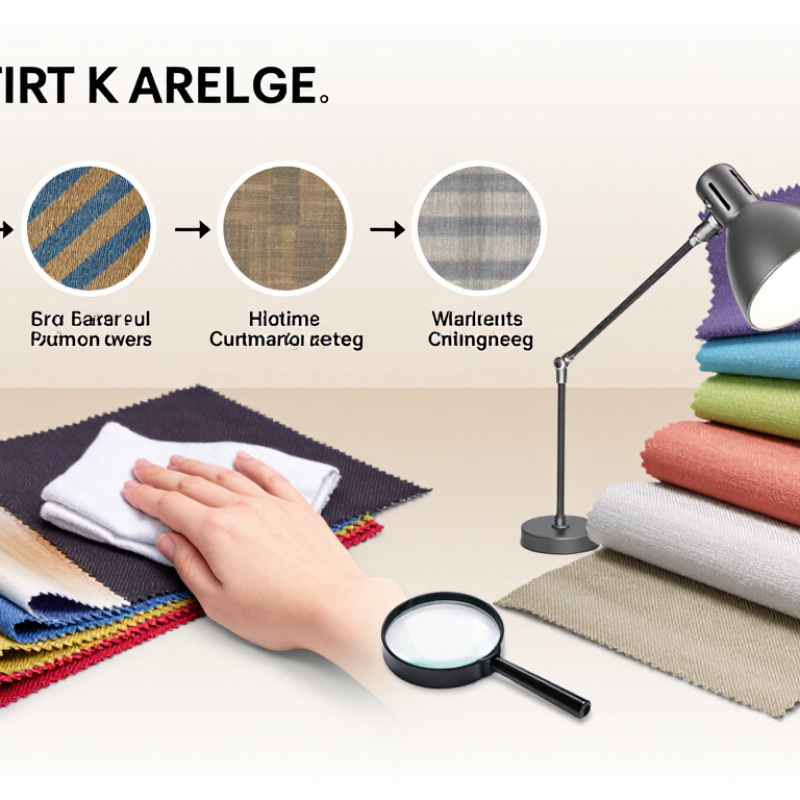
W. Edwards Deming, a leading quality-management expert, is often credited with the principle, “Quality is everyone’s responsibility.” That idea applies to choosing fabric, too. Ask the seller about fiber content, care instructions, and any available test results. Then inspect the swatch in daylight. Rub a clean white cloth across a dark surface. Stretch the fabric gently and see whether it returns to shape. Look closely at seams, loose threads, and uneven color. Small clues count.
Some checks take seconds. Others need equipment or a professional laboratory. A home rub test, for instance, is not a formal colorfastness assessment. And a tiny swatch may hide flaws in a larger cut. That limitation deserves attention. Before purchasing, consider how the fabric will be used: a sofa faces different wear from a blouse, and curtains meet different light conditions from upholstery. A sensible Fabric Testing routine combines hands-on inspection with clear questions and documented results. It will not make buying risk-free. It can make the choice more informed—and help you notice what a beautiful surface alone cannot tell you.
Check the Fabric Label and Fiber Composition
Before buying, turn the garment inside out and read its fiber label. Look for precise names and percentages, such as 60% cotton and 40% polyester, rather than relying on terms like “soft” or “natural.” A blend’s composition can hint at feel and care needs, but it cannot prove durability. Check the care instructions too. They offer practical clues about washing and drying.
Textile Exchange’s Materials Market Report 2024 estimates that global fiber production reached 124 million tonnes in 2023, with polyester making up about 57%. That figure describes production, not garment quality. Still, it shows why fiber names matter: a smooth fabric may contain synthetic fibers, even when its finish feels cotton-like. I sometimes find labels less informative than expected. Fiber percentages do not reveal yarn quality, fabric weight, or how well seams are made.
Tips: Compare the label with the fabric in your hands. Rub a small area gently and check for uneven threads, loose loops, or a stiff finish. For a blend, ask which fiber dominates and whether its care needs suit your routine. If the label is vague, pause. That small doubt is worth considering.
How to Test Fabric Quality Before Buying: Check the Fabric Label and Fiber Composition
Compare the fiber percentages on the label. Each example below represents a blend whose components add up to 100%; these are illustrative label examples, not lab-test results.
Check that the listed fiber percentages total 100% and match the product description. A label tells you the stated composition; it does not independently verify fabric quality.
Inspect the Surface for Defects and Unevenness
Before buying fabric, spread a full length across a clean table and inspect it under bright, neutral light. Move the cloth slowly; look for broken yarns, snags, holes, slubs, stains, and streaks in the dye. Then tilt it toward the light. Raised yarns and thin patches often show more clearly at an angle. Look twice. ASTM International’s D5430 standard describes visual inspection and grading methods for fabrics. In a commonly used four-point system, defects up to 3 inches receive 1 point; defects over 3 to 6 inches receive 2; over 6 to 9 inches receive 3; and longer defects receive 4. Check the seller’s inspection rules, since grading limits can vary.
Inspect from selvage to selvage, not just the center. Compare the fabric’s color and texture across several sections, especially around folds and near the edges. For prints, check whether lines or motifs shift unexpectedly; for plain weaves, watch for bands that look lighter or denser. Small flaws matter. A phone flashlight can help reveal surface irregularities, though it may exaggerate shine on some fibers. This check is not perfect: dark colors and busy patterns can hide defects, and a short sample may not represent the whole roll. If possible, examine a larger cut before committing.
Assess the Fabric’s Feel, Weight, and Drape
Before buying, touch the fabric with clean, dry hands. Notice whether it feels smooth, crisp, fuzzy, or slightly rough. Gently rub a small area between your fingers, then release it. Does it recover, wrinkle, or keep a crease? Feel alone cannot prove quality; linen, wool, and cotton naturally have different textures. I still find this test a little subjective.
Next, judge the weight and drape for the garment you plan to make or buy. Hold a corner at shoulder height and let it fall. Watch the fold. A heavier fabric may hang close to the body, while a lighter one may flutter or cling. Neither is automatically better. Check whether the material feels balanced in your hands, and consider how it might move when worn. A soft fabric can still feel flimsy, so compare its weight with its intended use.
Tips: Ask for a swatch if possible. Scrunch it gently, then see how quickly the creases relax. Feel it near a seam or finished edge, too; one small test may not represent the whole piece.
How to Test Fabric Quality Before Buying: Feel, Weight, and Drape | Fabric Type | Typical Weight | Feel Test | Drape Test | Quick Buying Check |
| Cotton poplin | About 100–150 g/m² | Smooth, crisp, and lightweight; it should not feel unusually rough or papery. | Hangs with a clean shape and moderate structure rather than flowing closely around the body. | Hold it to the light to check for evenness. Gently scrunch a corner and see whether the crease level suits your needs. |
| Linen | About 130–250 g/m² | Dry and textured, often with small natural slubs. It should feel sturdy, not brittle. | Usually relaxed and slightly structured; lighter linen moves more freely than heavier linen. | Check that the weave is consistent and that seams or edges do not appear weak. Natural creasing is typical. |
| Wool suiting | About 180–300 g/m² | Fine, resilient wool generally feels smooth and springy rather than scratchy or limp. | Falls in controlled folds and tends to recover its shape after being lifted and released. | Pinch a small area briefly, then release it. Look for reasonable recovery and a uniform surface. |
| Polyester chiffon | About 30–80 g/m² | Very light and fine, with a soft surface; quality can vary in smoothness and finish. | Flows easily and forms soft, loose folds. It may be slightly sheer. | Check the fabric against a light source for consistent transparency and inspect the edges for fraying. |
| Denim | About 250–450 g/m² | Firm and substantial, often becoming softer with wear and washing. | Heavier denim holds a more defined shape and does not flow as freely as lightweight fabrics. | Check the weave, stitching, and fabric surface for evenness. Confirm that the weight feels appropriate for the garment and season. |
| Jersey knit | About 140–250 g/m² | Soft and flexible, with visible stretch across the knit; the exact feel depends on fiber content. | Usually follows the body more closely than woven fabrics and may curl slightly at cut edges. | Stretch a small section gently and release it. Check that it returns without looking distorted or excessively loose. |
Note: Weight ranges are approximate and vary with fiber, yarn, weave or knit, and finishing. Compare fabrics by both weight and intended use; a higher weight does not automatically mean better quality.
Test Stretch, Recovery, and Seam Strength
Before buying fabric, test it with clean hands and a small, uncut section. Hold a palm-width area and pull gently across the grain, then along it. Notice how far it stretches and whether the weave opens, turns sheer, or distorts. A fabric that stretches in only one direction may suit a fitted garment differently from a loose shirt. Avoid a hard tug; force can damage delicate fibers and give misleading results.
Release the fabric and watch it for about ten seconds. Does it return flat, or stay rippled at the edges? Repeat the test several times, since some elastic fabrics recover once but sag after repeated pulls. Then let go. Compare the sample with an untouched area under the same light. Fine wrinkles can reveal that the fabric has not fully recovered.
For seam strength, test a sewn sample if one is available. Hold the cloth on both sides of the seam and pull gently, as if easing the stitching apart. Look for gaps, broken threads, or yarns sliding out. A loose swatch cannot reliably show how a finished seam will hold, so ask for a stitched sample when possible. Keep the test modest. It cannot predict years of wear, and even a dense weave may fray after cutting. That uncertainty matters.
Check Colorfastness and Care Requirements
Before buying fabric, test whether its color transfers. Ask for a swatch, then rub it with a clean, dry white cloth for several seconds. If the cloth picks up color, the fabric may bleed or crock during use. Try again with a barely damp cloth, especially for dark cotton, denim, or brightly dyed material. Check an inconspicuous corner, if available. A small mark matters.
Colorfastness can change with heat, detergent, and repeated washing. Look for care instructions before choosing a fabric for clothes, curtains, or upholstery. “Dry clean only” may be inconvenient for everyday items, while cold-water washing can help protect some dyes. Still, labels do not reveal every detail. Ask whether the sample has been prewashed, and follow the stated instructions rather than assuming a test swatch will behave exactly like a finished item.
Match the care routine to your real habits. If you rarely separate laundry, a fabric that needs careful sorting may be a poor fit. Keep it simple. A home rub test is useful, but it cannot guarantee long-term color stability. It is tempting to treat one clean swatch as proof; that is too optimistic. Ask about shrinkage and test a larger sample when possible.


