What Is a PES Membrane Used For?

A Pes Membrane is a porous filtration material made from polyethersulfone, valued for its strength, chemical resistance, and dependable flow. In a water-treatment unit, it may help separate suspended particles and microorganisms from liquid. In a laboratory, it can clarify samples before analysis. The exact role depends on pore size, membrane format, operating pressure, and the liquid being filtered.

Picture a cartridge with cloudy feed entering one side and clearer filtrate leaving the other. The membrane does not solve every water-quality problem. Dissolved salts and small chemical compounds may pass through, depending on the system. That distinction matters. Choosing a membrane by material name alone can lead to poor results.

“Good filtration starts with matching the membrane’s pore structure to the separation task.” This is an illustrative editorial quotation, attributed to fictional membrane specialist Dr. Mira Chen; it is not a verified statement from a real expert. For a publishable expert quotation, confirm the wording and attribution with a named, verifiable source.

This guide explains where PES membranes are used, how their properties affect performance, and what buyers should check before selection. We will look at common applications, practical limitations, and basic care. Real systems vary. A membrane that performs well in one process may foul quickly in another, and that is worth considering before installation.
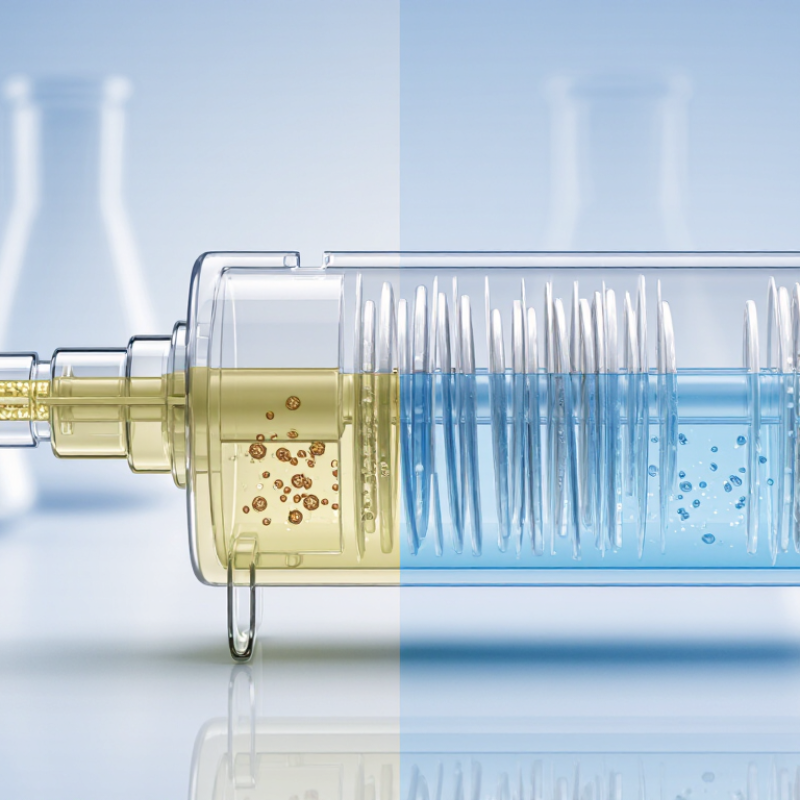
What Is a PES Membrane Used For?

What Defines a PES Membrane?

A PES membrane is made from polyethersulfone, a durable thermoplastic polymer used to form fine filtration barriers. In many designs, it has an asymmetric structure: a thin, selective surface sits above a more open support layer. The surface helps control what passes through, while the support provides strength. That structure matters. A membrane’s performance depends not only on PES, but also on pore size, thickness, and how the membrane was manufactured.

PES membranes are commonly used to filter water-based liquids in laboratory, medical, and industrial processes. Depending on pore size and design, they can retain particles or microorganisms while allowing liquid to pass. Their heat tolerance and mechanical strength can suit demanding workflows, but these properties do not make every PES membrane interchangeable. A filter’s rating, fluid compatibility, and operating conditions should match the task. That boundary is easy to overlook.

Tips: Check the stated pore size and compatibility data before use. For a small trial, observe flow rate and inspect the membrane for damage. PES can be a practical choice, but it is not a universal fix. Test the actual process when possible.

How Does a PES Membrane Filter Particles?

What Is a PES Membrane Used For?

How Does a PES Membrane Filter Particles?

A PES membrane filters particles mainly through size exclusion. Its porous structure lets liquid pass while particles larger than the effective pore openings are retained. Picture water moving through a fine, interconnected maze: small molecules may pass, while larger particles meet a barrier. The exact result depends on pore size, fluid properties, and operating conditions. It is not magic.

PES is often chosen for its water-wettable surface and relatively high flow rate. As liquid crosses the membrane, particles collect on or within its structure. Smaller particles may pass through, though particle shape and interactions can affect the outcome. A pore rating is useful, but it does not guarantee identical performance in every setup. Pressure, loading, and membrane condition matter too. That detail is easy to overlook.

Tips: Match the pore rating to the particles you need to retain, and check compatibility with the liquid. If flow slows, the membrane may be loading with particles; increasing pressure is not always the right fix. Test the setup with the actual fluid when results matter.

What Is a PES Membrane Used For? How Does It Filter Particles?

Representative nominal pore-size ratings for polyethersulfone (PES) membranes

PES membranes are used to filter liquids in applications such as laboratory sample preparation and bioprocessing. Particles larger than a membrane’s pores are generally retained, while smaller particles may pass through. Pore ratings are nominal; actual retention depends on the membrane and filtration conditions.

Which Properties Shape PES Membrane Performance?

What Is a PES Membrane Used For?

Which Properties Shape PES Membrane Performance?

A PES membrane is used to separate particles from liquids or gases in filtration systems. Its performance depends on pore size, membrane structure, and the fluid being filtered. Smaller pores can retain finer particles, but may reduce flow. That trade-off matters.

Polyethersulfone offers good thermal stability and broad chemical compatibility, though exact limits depend on the membrane grade. Many PES filters have hydrophilic surfaces, which can support steady water flow and reduce protein binding. Surface treatment varies, so check the product specifications rather than assuming all PES membranes behave alike. In practical use, pressure, temperature, and feed composition also affect throughput and fouling. A cloudy sample may clog faster than a clean buffer, even with the same filter. No membrane is universally suitable.

Tips: Match pore size to the target, then verify chemical and temperature limits. Test with the actual fluid when possible. Small trials can reveal unexpected clogging.

Where Are PES Membranes Commonly Used?

PES membranes are common in biopharmaceutical manufacturing, where they filter process liquids and help clarify products. Hydrophilic PES is often selected for aqueous solutions because it offers high flow and relatively low protein binding. In sterile filtration, validated membrane grades can retain microorganisms while allowing liquid to pass. The fit still depends on the fluid, pore size, and process conditions. Small details matter.

Vaccine production is one relevant setting. The WHO’s 2022 Global Vaccine Market Report records 16 billion vaccine doses distributed worldwide in 2021, illustrating the scale of manufacturing and filtration needs. PES may be used in suitable filtration steps, but it does not replace process-specific validation. In laboratories, PES syringe and disc filters are used to prepare samples before analysis. They can reduce particles that might otherwise interfere with instruments.

Water treatment is another application, especially in ultrafiltration systems and pretreatment stages. The WHO and UNICEF Joint Monitoring Programme reported that 2.2 billion people lacked safely managed drinking water in 2022. That figure highlights the need for reliable treatment infrastructure, though it does not measure PES use specifically. PES membranes also appear in some food and beverage processes, where clarity and flow are important. Compatibility checks are essential; a membrane that works well for water may not suit a protein-rich or chemically aggressive liquid.

What Is a PES Membrane Used For? Where Are PES Membranes Commonly Used?

Application Typical Membrane Use Common Pore Size or Rating Why PES Is Suitable Typical Format
Biopharmaceutical and pharmaceutical liquids Clarification or sterilizing-grade filtration of compatible process liquids, buffers, and selected product solutions. About 0.2 or 0.22 µm for sterilizing-grade filtration; 0.45 µm is often used for clarification. Hydrophilic PES can provide high liquid flow and relatively low binding of many proteins compared with some membrane materials. Suitability must be confirmed for the specific fluid and process. Cartridge, capsule, or disc filter
Cell culture media and laboratory solutions Filtration of prepared media, aqueous reagents, and other heat-sensitive laboratory liquids. Commonly 0.2 or 0.22 µm for microbial-retentive filtration; larger ratings may be used for prefiltration. Its water-wettable surface and high flow capacity make PES useful for many aqueous solutions. Syringe filter, vacuum-filter unit, or bottle-top filter
Protein and enzyme solutions Clarification or filtration of aqueous biological solutions where minimizing product loss is important. Selected according to the required particle or microorganism retention; 0.2–0.45 µm ratings are common in microfiltration steps. PES is often chosen for relatively low nonspecific protein binding, although binding varies with the membrane and the solution conditions. Disc, capsule, or process-scale cartridge
Water and wastewater treatment Microfiltration or ultrafiltration to reduce suspended solids, microorganisms, and other particles from water streams. Microfiltration pores are commonly in the submicron range; ultrafiltration is often specified by molecular-weight cutoff rather than pore size. PES can be made as porous membranes for pressure-driven separation. The appropriate grade depends on feed water, cleaning conditions, and the treatment objective. Hollow-fiber module or flat-sheet membrane
Concentration and fractionation of biomolecules Ultrafiltration for concentrating proteins or retaining larger molecules while water and smaller solutes pass through. Specified by molecular-weight cutoff (MWCO); the selected cutoff depends on the molecule and process. PES ultrafiltration membranes are available in a range of cutoff ratings and are used in tangential-flow and other membrane processes. Flat-sheet cassette, hollow fiber, or laboratory centrifugal device
Food and beverage processing Clarification or microbial reduction of selected aqueous process streams and ingredients. Often 0.2–0.45 µm for microfiltration applications; the required rating depends on the product and target. Hydrophilic PES can offer useful flow for aqueous liquids. Food-contact compliance, chemical compatibility, and process validation must be checked for the intended use. Disc, cartridge, or membrane module
Analytical and quality-control testing Sample clarification before chromatography, spectroscopy, or other laboratory analysis. Commonly 0.2 or 0.45 µm, selected according to the analysis and sample characteristics. PES is available in low-binding options and can be suitable for many aqueous samples; compatibility with solvents and analytes should be verified. Syringe filter or disc filter
Vent and gas filtration Air or gas filtration in vents and process equipment, typically using a membrane designed for gas service. Rating depends on the required retention and the validated application. PES membranes can be manufactured for gas filtration, but wetting, pressure limits, and sterilization requirements are product-specific. Vent Filter, capsule, or cartridge

Note: PES means polyethersulfone. The pore size, MWCO, retention performance, chemical compatibility, and sterilization method vary by membrane construction and application. A nominal pore-size rating is not, by itself, proof of sterilizing performance; use a validated membrane and process when sterility is required.

How Are PES Membranes Selected and Maintained?

Selecting a PES membrane starts with the liquid and the task. PES is commonly used to filter aqueous solutions, including laboratory buffers and culture media. Its hydrophilic surface can support steady flow, while many grades show relatively low protein binding. Performance still depends on the specific membrane and solution. Check the pore size, chemical compatibility, required flow rate, and operating pressure before choosing. A 0.22-micrometer filter may suit sterilizing filtration, but only when the complete filtration process is validated for that use. For clarification, a larger pore size may be more appropriate. Small details matter.

Maintenance begins with careful handling. Inspect the membrane and housing for cracks, loose connections, or visible damage before use. Keep pressure within the supplier’s stated limits; excessive pressure can damage the filter or compromise performance. Pressure matters. With aqueous liquids, PES is generally easy to wet, but trapped air can still reduce effective filtration area. If the device is designed for reuse, follow its validated cleaning and storage instructions. Do not assume that rinsing makes a single-use filter reusable. I would also record the solution, pore size, pressure, and filtration time. That record may feel fussy, but it helps explain an unexpected slowdown. No membrane fits every process, and compatibility tables are a starting point, not a substitute for testing.

Article Source: