10 Tips for Choosing Orthopedic Spine Implants

Choosing Orthopedic Spine Implants is not a catalog exercise. The right choice depends on the diagnosis, anatomy, surgical plan, bone quality, and the patient’s goals. A cage that fits neatly on an imaging screen may still be unsuitable for a particular patient. Small details matter: implant dimensions, material, fixation method, and compatibility with the planned procedure. So does the evidence behind the device.

Orthopedic spine surgeon Dr. Alexander R. Vaccaro is a relevant clinical authority in this field. To avoid putting unverified words in his mouth, the following is an editorial paraphrase, not a direct quotation: “Choose the implant to support the patient’s anatomy and surgical goal—not the other way around.” That principle frames these ten tips. They cover questions to discuss with a qualified spine specialist, including clinical evidence, device design, risks, and follow-up needs. No single implant suits every case. Not even close.

A sound decision also accounts for what is uncertain. Research may not answer every question for every patient, and a promising feature is not proof of better outcomes. Ask how the device supports the treatment plan, what alternatives exist, and what recovery may involve. Bring the questions to your care team. That conversation matters.
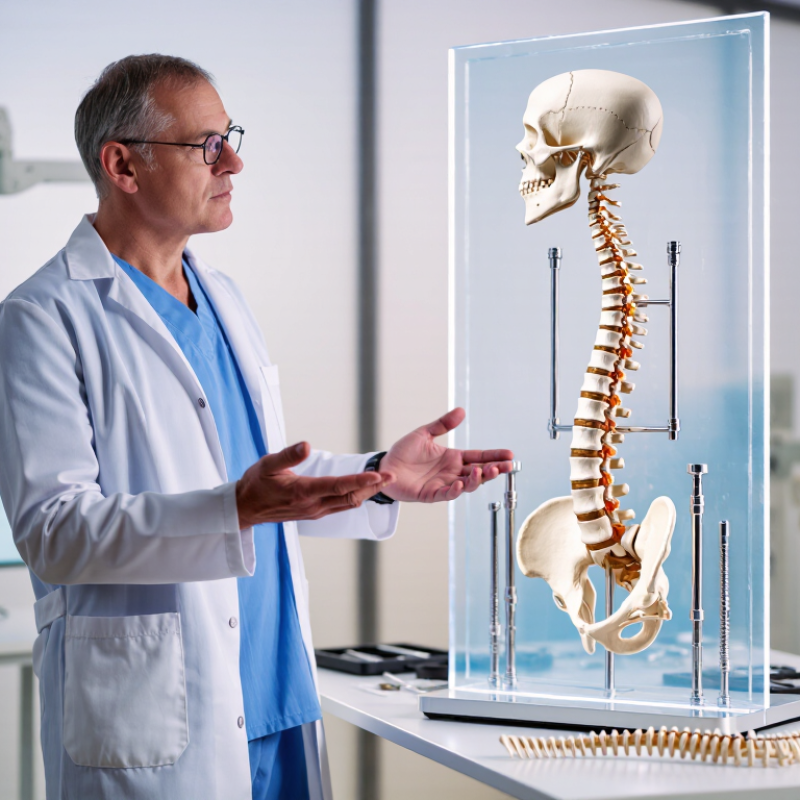
10 Tips for Choosing Orthopedic Spine Implants

Understanding the Purpose and Requirements of Spine Implants

Orthopedic spine implants are devices used to support or stabilize parts of the spine during certain procedures. Depending on the plan, screws, rods, plates, or cages may help maintain alignment or support bone fusion. An implant does not treat every source of back pain. Its purpose should match a clear diagnosis and a specific surgical plan.

That distinction matters. The surgeon considers the spinal levels involved, a person’s anatomy, bone quality, symptoms, and overall health. Imaging helps define the problem. Osteoporosis, smoking, medications, and previous surgery may also affect planning or healing. Fit is personal. A device suited to one person may not suit another, even when their scans look similar. Patients should hear the expected benefits and limits, along with risks such as infection, loosening, or failure to fuse.

Ask what the implant is meant to do and whether nonsurgical or other surgical options are appropriate. Discuss how recovery may affect lifting, bending, and walking, and when follow-up imaging may be needed. Small details matter, such as how long sitting may be comfortable. Surgical findings can differ from what scans suggest, so plans may sometimes change. A written explanation of the proposed spinal levels and implant materials can make the conversation easier.

10 Tips for Choosing Orthopedic Spine Implants: Understanding Purpose and Requirements

Representative elastic modulus of materials used in or compared with spinal implant design

Values are approximate representative elastic moduli in gigapascals; actual values vary by material grade, processing, and measurement method. Modulus alone does not determine implant suitability—clinical indication, anatomy, construct design, and a qualified clinician’s judgment also matter.

Comparing Implant Types and Surgical Applications

Orthopedic spine implants serve different mechanical roles, so comparing them by name alone can mislead. Pedicle screw-and-rod systems stabilize vertebrae from the back and are commonly used during fusion for instability or deformity. Interbody cages sit between vertebral bodies after disc removal. They help maintain spacing and provide a place for bone growth. Cage shape and placement vary with the surgical approach.

In the neck, plates and screws may support fusion across one or more levels. For selected patients, an artificial disc may preserve motion, but it is not suitable for every diagnosis or anatomy. That distinction matters. Thoracic and lumbar procedures may need different fixation patterns because spinal curvature, loading, and surgical access vary.

Surgeons consider bone quality, prior operations, imaging, and the levels being treated. Material and size matter, but so do fit and placement.

A comparison chart cannot capture every surgical trade-off. A smaller implant is not automatically better, and more fixation is not always necessary. The right option depends on the clinical goal and the patient’s anatomy. Patients can ask how each implant supports the planned procedure, what alternatives exist, and how bone healing will be monitored. Details count. In practice, implant selection can involve judgment, and reasonable specialists may weigh the same findings differently.

Assessing Materials, Design, and Durability

Choosing orthopedic spine implants means looking beyond a product’s headline strength. Material affects weight, stiffness, corrosion behavior, and visibility on imaging. Titanium alloys are commonly selected for their strength and compatibility with bone, while other materials may offer different mechanical or imaging properties. There is no universally best option. The patient’s anatomy, bone quality, surgical plan, and medical history all matter. A qualified spine specialist should weigh these factors.

Design details deserve close attention. A screw’s diameter, thread shape, and length influence how it engages bone. Rods and connectors must fit the planned construct without creating unnecessary stress points. Ask how the implant’s geometry supports the intended procedure, and whether its documentation describes fatigue testing and relevant clinical evidence. Small details count. A polished specification sheet can still leave practical questions unanswered; I would want those clarified before treatment.

Durability is not just a laboratory number. Repeated movement places changing loads on an implant, and healing conditions can affect how those loads are shared. Look for clear information on material standards, manufacturing quality controls, and long-term follow-up where available. Imaging compatibility also matters, since clinicians may need to assess healing after surgery. No implant can guarantee a particular result. Discuss expected benefits, risks, and alternatives with the treating surgeon, including how the chosen design fits the individual case.

Checking Safety Evidence and Patient Compatibility

Safety evidence is more useful when it answers specific questions. Ask what clinical studies have examined the implant, how long patients were followed, and which complications were recorded. A study with a few months of follow-up may not reveal problems that develop later. Check whether the participants resemble you in age, diagnosis, bone health, and previous surgery. Their results may not apply to every patient.

Look beyond promotional claims. Ask about reported revision rates, implant movement, infection, and how missing follow-up data were handled. Evidence can be uneven; that deserves an honest conversation, not a quick dismissal. That matters. Your surgeon should explain what is known, what remains uncertain, and why a particular option fits your case.

Compatibility depends on more than the scan. Bone quality, spinal anatomy, allergies, prior procedures, and daily activities may affect the choice. Bring a current medication list and mention reactions to metals or other materials. Ask whether the implant could affect future imaging or treatment. A second opinion can help if the explanation feels rushed. Even careful planning has limits, and it is reasonable to ask what could change the recommendation during surgery.

10 Tips for Choosing Orthopedic Spine Implants - Checking Safety Evidence and Patient Compatibility

# Tip What to Check Why It Matters Questions to Ask
1 Confirm the diagnosis and treatment goal Review imaging, symptoms, examination findings, and the reason surgery is being considered. An implant should address a specific clinical problem; it does not guarantee pain relief or restore normal function. What problem is the implant intended to address, and what are the non-surgical alternatives?
2 Check regulatory status and intended use Verify authorization or clearance in the country where treatment will take place, and confirm the device is intended for the proposed procedure and spinal level. Regulatory requirements and permitted indications vary by jurisdiction and device type. Is this use within the device’s locally authorized indication?
3 Look for relevant clinical evidence Review published studies, follow-up duration, patient numbers, outcome measures, and reported complications for the same procedure and patient group. Results from a different implant, procedure, or population may not apply to an individual case. What evidence supports this option, and how closely do the study participants resemble me?
4 Compare benefits with known risks Discuss procedure-specific risks such as infection, bleeding, nerve injury, non-union after fusion, implant loosening or breakage, and possible revision surgery. Risk depends on the operation, the patient’s health, and other individual factors; no implant is risk-free. Which risks are most relevant to me, and how are complications managed?
5 Assess anatomical fit and bone quality Consider spinal anatomy, bone density, alignment, the number of levels involved, and whether the implant’s available sizes suit the planned placement. Fit and bone quality can affect fixation, stability, and the likelihood of healing. How do my imaging results and bone health affect implant selection?
6 Review materials and allergy history Ask what materials are used and disclose known allergies or prior reactions to metals, polymers, bone cement, or other surgical materials. Material sensitivities are uncommon but may be relevant; testing is considered based on clinical history. Does the implant contain any material that may be unsuitable for me?
7 Check MRI conditions and imaging needs Obtain the implant’s MRI safety information, including any stated conditions, and ask how it may affect future imaging or image quality. MRI conditions are device-specific. Do not assume an implant is safe for every scanner or setting. What MRI conditions apply, and how can I access this information in the future?
8 Consider health conditions and medications Discuss smoking, diabetes, osteoporosis, infection risk, prior spinal surgery, and medicines that may affect bleeding or bone healing. These factors may influence surgical risk, recovery, and fusion; medication changes should be directed by the care team. Can any health condition or medicine be optimized before surgery?
9 Ask about the surgeon’s experience and alternatives Discuss the surgeon’s experience with the proposed procedure and ask whether other implant types or treatment approaches are reasonable. The choice should reflect the clinical situation, available evidence, and informed patient preferences—not brand preference alone. What are the alternatives, and why is this option preferred for my case?
10 Plan follow-up and keep implant records Ask about follow-up visits, activity guidance, warning signs, and how to obtain the implant identification and operative records. Ongoing care helps clinicians assess recovery and provides useful device information for future treatment. Who should I contact with concerns, and how will my implant details be documented?

Note: This table is for general education only and is not a substitute for individualized medical advice. Implant choice should be discussed with a qualified spine specialist using current, device-specific information.

Discussing Options, Risks, and Costs with Your Spine Surgeon

Before choosing an implant, ask your surgeon what problem it is meant to solve in your specific spine. Options may include screws and rods, cages, artificial discs, or bone graft materials, depending on the procedure. Ask why one approach fits your scans, symptoms, bone quality, and daily activities better than another. Ask plainly.

Discuss likely benefits alongside uncertainty. Implants may support stability or fusion, but they do not guarantee pain relief. Your surgeon should explain risks such as infection, bleeding, nerve injury, implant loosening, or another operation. Personal risks can change with smoking, diabetes, medications, or prior surgery. Request a follow-up plan, including imaging and symptoms that need prompt attention. Small details matter.

Costs deserve the same direct conversation. Ask for an itemized estimate covering the implant, surgeon, hospital, anesthesia, imaging, and follow-up visits. Check what insurance covers, your likely out-of-pocket amount, and whether complications or revision surgery could mean additional charges. Costs vary by facility and treatment plan, so request written figures before scheduling. If an answer feels rushed, ask again. A clear explanation is more useful than a confident promise, though the conversation can feel awkward. Bring notes.