Blog
2026 Top Intermittent Pressure Device Manufacturers for Buyers
As hospitals and home-care providers manage venous disease, postoperative swelling, and immobility risks, demand for reliable compression technology continues to grow. An Intermittent Pressure Device applies programmed air pressure through cuffs, sleeves, or boots. The result resembles a measured hand massage around the limb. It is practical, but not automatically suitable for every patient.
Market research supports continued expansion. Grand View Research has reported steady growth in the global intermittent pneumatic compression device market, driven by vascular-care demand and aging populations. Fortune Business Insights also identifies hospitals, rehabilitation centers, and home healthcare as important application segments. These reports use different definitions and forecast periods. Their numbers should not be treated as identical. That matters when buyers compare supplier claims.
This guide examines 2026 manufacturers through product design, clinical usability, manufacturing experience, and service capability. Important checks include pressure-range accuracy, cycle control, cuff sizing, alarm visibility, cleaning procedures, and replacement-part availability. Buyers should also review published clinical evidence and relevant regulatory clearances in their markets. A lower purchase price may become expensive when pumps fail, tubing cracks, or staff training is weak. Small details matter.
No ranking is perfect. Manufacturer visibility does not equal product quality. Some companies publish impressive specifications but limited real-world evidence. A careful buyer should request test reports, warranty terms, user manuals, and post-sale support details before placing an order. This overview aims to provide a clearer, evidence-informed starting point for procurement teams, clinicians, and distributors evaluating leading Intermittent Pressure Device manufacturers in 2026.
What Intermittent Pressure Devices Are and How They Work
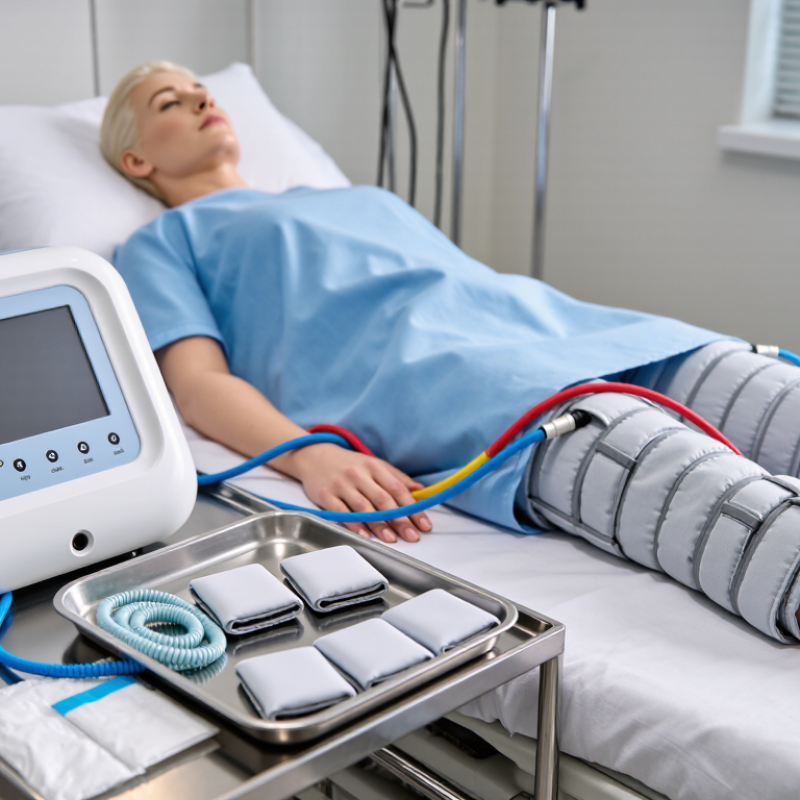
Intermittent pressure devices use controlled air pressure to support circulation in a limb. They usually include a compact pump and an inflatable sleeve, boot, or cuff. The pump fills separate chambers in sequence. Pressure often moves from the foot or hand toward the upper limb. This pattern can encourage venous blood to return toward the heart.
Unlike continuous compression, intermittent pressure rises and releases in repeated cycles. The pauses matter. They allow tissues to relax and help users tolerate treatment for longer periods.
Clinicians may consider these devices for swelling management, circulation support, or recovery routines. Suitability depends on the person’s health, skin condition, sensation, and prescribed pressure. A device can feel comfortable yet still be unsuitable.
Tips: Check the sleeve size before use. It should feel secure, not painfully tight. Inspect the skin after each session, especially around bony areas. Stop if numbness, unusual pain, color changes, or worsening swelling appears. Follow professional instructions rather than copying another user’s settings. I have found that quiet operation can create false confidence; correct pressure matters more than low noise. Some guidance is also too general, so buyers should ask for measurable settings, cleaning instructions, alarm functions, and service support.
Key Applications and Benefits Across Clinical Care
For buyers evaluating 2026 intermittent pressure device manufacturers, clinical application should guide every decision. These devices deliver repeated air pulses through sleeves, cuffs, or mattresses. The pressure supports venous return, manages swelling, and can reduce prolonged tissue loading.
Hospitals often use compression systems for patients with limited mobility after surgery. Rehabilitation clinics may apply them during lymphedema and edema management.
Alternating-pressure mattresses can help protect vulnerable skin during extended bed rest. Benefits depend on correct sizing, pressure settings, and patient assessment.
Poor fitting can cause discomfort or skin problems. No device suits every patient.
Tips: Ask for pressure-control accuracy, clear alarm functions, washable materials, and documented testing. Check whether staff can operate the controls quickly. Review cleaning procedures, service access, and replacement-part availability before purchasing.
Clinical teams should monitor skin color, sensation, pain, and swelling during use. These details matter more than attractive specifications. Evidence can guide procurement, but bedside feedback should not be ignored.
Some systems seem efficient on paper, yet feel too noisy or complicated during busy shifts. That weakness deserves honest review.
How to Evaluate Intermittent Pressure Device Manufacturers
Evaluating intermittent pressure device manufacturers in 2026 requires more than comparing prices. Grand View Research’s 2024 market assessment projects approximately 5% annual growth for intermittent pneumatic compression through 2030. Growth attracts capable suppliers, but also creates noise. Ask for ISO 13485 certification, pressure accuracy records, risk-management files, and clinical evidence for each intended use. A polished brochure is not proof.
Real-world performance deserves close attention. The CLOTS 3 trial, published in The Lancet, studied 2,876 patients and reported deep-vein thrombosis in 8.5% of patients using intermittent compression, compared with 12.1% receiving usual care. Manufacturers should explain cuff sizing, inflation cycles, alarm behavior, and skin-pressure safeguards. Request test results under movement, not only on a quiet laboratory bench.
Inspect the service system too. Can the supplier provide calibration certificates, spare cuffs, software updates, and response times for failures? Check whether pressure logs can be exported for clinical review. FDA device-reporting guidance emphasizes traceability and post-market surveillance, so ask for complaint trends and corrective-action procedures. I would not treat the lowest quotation as the best value. Some buyers overlook training; that is a practical weakness worth admitting. A device may be technically excellent, yet poorly fitted cuffs can undermine its performance.
2026 Comparison of Leading Manufacturers and Product Capabilities
2026 Top Intermittent Pressure Device Manufacturers for Buyers
The 2026 comparison should begin with clinical capability, not catalog size. The CDC estimates that up to 900,000 Americans experience venous thromboembolism each year. This demand supports wider use of intermittent pneumatic compression in hospitals, rehabilitation centers, and home care. Leading manufacturers now offer programmable pressure cycles, adjustable sleeves, quiet pumps, and rechargeable power options. Some systems monitor pressure continuously, while simpler units depend on preset settings. That difference matters beside a hospital bed.
NICE guideline NG89 recommends intermittent pneumatic compression for selected patients when drug-based prevention is unsuitable. Buyers should therefore examine evidence, not only comfort claims.
Compare pressure ranges, inflation timing, alarm visibility, sleeve sizing, cleaning procedures, and battery duration. A 2024 market assessment by Grand View Research reported continued growth in the global compression therapy sector, driven by vascular care and aging populations. Market figures vary between reports. They should be treated as directional, not absolute.
In practice, a device with a clear display and a 10-hour battery may outperform a cheaper unit with more modes. Not always.
Staff training, maintenance access, and published clinical validation can change the result. Manufacturers with strong technical files and post-market surveillance deserve closer review. Some product comparisons still overlook skin tolerance and noise, which is a serious weakness.
Buyer Checklist for Compliance, Support, and Total Cost
Choosing an intermittent pressure device manufacturer requires more than comparing purchase prices. Buyers should request current certificates, product specifications, and evidence of quality controls. Check whether the manufacturer follows relevant medical-device regulations, ISO 13485, and applicable electrical safety standards. Requirements differ by market.
Ask how pressure accuracy is tested. Request calibration records and sample inspection reports. During evaluation, examine the tubing, cuffs, connectors, alarms, and display under repeated use. Small faults become expensive when staff face delays. Keep records.
Support quality matters after delivery. Confirm installation training, user manuals, response times, warranty coverage, and spare-part availability. Ask whether technical help is available in your time zone. A clear escalation process protects patient care and reduces downtime. It should be written.
Calculate total cost over three to five years. Include consumables, preventive maintenance, calibration, software updates, shipping, training, and disposal. A low quotation may hide costly replacement cuffs or long repair periods. Request a service-level agreement with measurable commitments.
Experience also reveals uncomfortable gaps. Some suppliers provide excellent documents but weak field support. Others respond quickly but lack consistent records. A practical trial can expose both problems. Test several devices in realistic ward conditions, collect staff feedback, and compare failure logs. Do not rely on a polished presentation alone. A checklist can still miss usability issues, especially when tired staff operate equipment during busy shifts.