Blog
China Best Medicine At Home Suppliers for Global Buyers?
The search for China Best Medicine At Home Suppliers for Global Buyers? reflects a growing demand for reliable home healthcare solutions. Medicine At Home may include approved over-the-counter products, basic home-care medicines, digital health tools, and related supplies. Buyers need more than attractive factory pricing. They need traceable sourcing, stable quality, and clear regulatory documentation.
The World Health Organization estimates that one in ten medical products in low- and middle-income countries is substandard or falsified. That figure makes supplier verification essential. IQVIA Institute’s Global Use of Medicines 2024 report also shows continued growth in global medicine use and spending through 2028. China remains an important manufacturing base, but supplier quality differs widely. A professional review should examine GMP certification, product registration, batch records, certificates of analysis, and export experience. It should also check whether labels, packaging, storage conditions, and shipping methods meet the destination market’s requirements.
Look closely at the details. Can the supplier provide temperature records for heat-sensitive goods? Are expiry dates visible on sample cartons? Does the company explain recalls without hesitation? These practical checks often reveal more than a polished website. However, no supplier list stays perfect. Certifications can expire, product lines can change, and online claims may be incomplete. This guide therefore compares Chinese suppliers through a risk-aware lens, using public records, industry reports, buyer experience, and direct verification. Compliance comes before convenience. A cheaper order is not a successful order if customs, regulators, or patients cannot accept it.
What Are At-Home Medicine Suppliers in China?
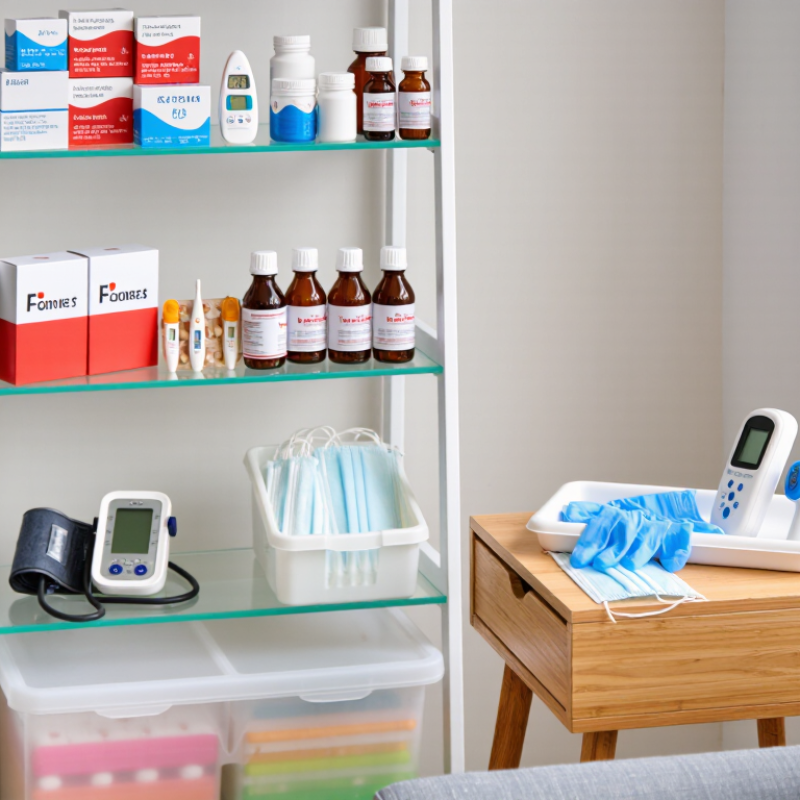
At-home medicine suppliers in China provide products used for everyday healthcare outside hospitals. Their catalogs may include approved over-the-counter medicines, thermometers, blood pressure monitors, wound-care items, and basic health accessories. Some suppliers manufacture these products, while others handle sourcing, packaging, or export services. The term can be misleading. Not every online seller is a qualified medicine supplier.
Reliable suppliers should show clear business registration, manufacturing details, product specifications, and quality-control records. Buyers should request batch information, shelf-life data, storage instructions, and certificates required by the destination market. For medical devices, documents may include test reports and conformity evidence. For medicines, local registration and import rules are especially important. A Chinese export license alone may not satisfy another country’s requirements.
In practical sourcing, product labels deserve close attention. Check active ingredients, dosage instructions, warnings, language accuracy, and packaging seals. A professional supplier should answer these questions without pressure or vague promises. Video inspections, sample orders, and independent laboratory testing can reduce avoidable risks. Still, samples do not guarantee every future batch will match. That point is easy to overlook. I would also compare production capacity with actual delivery records, because a large catalog may hide limited experience. Clear contracts should define quality standards, documentation, shipping conditions, and responsibility for nonconforming goods.
How to Identify Reliable Chinese Suppliers for Global Buyers
China Best Medicine At Home Suppliers for Global Buyers?
How to Identify Reliable Chinese Suppliers for Global Buyers
A reliable medicine supplier should provide clear manufacturing licenses, product registrations, and current GMP evidence. Do not rely on polished websites alone. Request the factory address, production scope, inspection history, and responsible quality contact. Documents should match the legal entity shown on the quotation and contract.
Ask for batch-specific certificates of analysis, stability data, ingredient specifications, and packaging details. Check whether labels support your destination market’s language and regulatory rules. For temperature-sensitive products, examine storage records, monitoring devices, and the proposed shipping route. A brief video tour is useful, but an independent audit offers stronger evidence. Small details matter.
Begin with a controlled sample order. Inspect seals, lot numbers, expiry dates, cartons, and temperature indicators upon arrival. Then compare the delivered documents with the physical products. A successful sample does not guarantee stable large-scale production. That is an uncomfortable gap. Third-party testing can reduce the risk, although it adds time and cost. Clarify recall procedures, complaint handling, lead times, payment terms, and change-notification duties before signing. Some suppliers answer quickly but avoid precise questions. Treat that pattern as a warning, not a minor communication issue.
Which Medicine Categories and Quality Standards Should Buyers Review?
Global medicine buyers should classify products before comparing suppliers. Common categories include oral tablets, capsules, topical treatments, diagnostic medicines, and sterile injectables. Each category carries different risks. Sterile products require tighter controls than standard tablets.
Check whether the supplier operates under recognized Good Manufacturing Practice standards. Review manufacturing licenses, inspection records, batch numbers, and product registration documents. A valid Certificate of Analysis should match the exact batch shipped. It should include identity, strength, purity, microbial limits, and expiration data. Ask for stability studies, not only a laboratory test. Storage conditions matter too.
Look for traceable sourcing of active pharmaceutical ingredients and clear packaging controls. Pharmacopoeial references, such as recognized national or international monographs, can support quality comparisons. Temperature-sensitive products need validated shipping, data loggers, and documented handling procedures. Supplier audits should examine cleanrooms, deviation reports, recall procedures, and staff training. A certificate alone can mislead. Documents may be current, while daily practices remain inconsistent. Buyers should also confirm destination-country registration, import rules, labeling language, and licensed distribution channels. I would not treat low pricing as proof of efficiency; it may hide weak testing or unstable supply. One overlooked detail, such as a damaged seal, can change the purchasing decision.
How to Verify Supplier Credentials and Regulatory Compliance
China Best Medicine At Home Suppliers for Global Buyers?
Selecting reliable Chinese medicine suppliers requires more than comparing prices or attractive product photos. Global buyers should request the supplier’s registered business license, manufacturing authorization, and current Good Manufacturing Practice certificate. Check whether the certificate covers the exact facility and product category. A document can look convincing. It may still be outdated.
Ask for recent batch records, Certificates of Analysis, stability data, and traceability procedures. Product labels should match the approved registration details, dosage instructions, storage conditions, and expiry information. Independent laboratory testing can confirm identity, strength, purity, and microbiological quality. Verify the laboratory’s accreditation as well. A factory tour, conducted in person or by live video, can reveal storage conditions, temperature monitoring, and packaging controls. Do not rely only on edited photographs. One limitation remains: overseas buyers cannot observe every production step.
Tips: Check certificates through issuing authorities, not only supplier emails. Confirm the legal importer’s requirements before signing a contract. Request a small, compliant sample shipment and review its documents first. Keep written records of every quality discussion. Also, ask how complaints, recalls, and damaged shipments are handled. A capable supplier should answer clearly and provide responsible contacts. If responses change between departments, pause the evaluation. That inconsistency deserves reflection.
How to Compare Prices, Logistics, and After-Sales Support
China Best Medicine At Home Suppliers for Global Buyers?
Comparing suppliers requires more than checking the lowest unit price. Ask for a detailed quotation covering product cost, packaging, documentation, testing, and payment terms. A low price can hide higher minimum order quantities or expensive customization. Calculate the landed cost, including freight, insurance, duties, and local handling charges. Request recent batch records and product specifications from authorized quality contacts. Check whether documents match your market’s import requirements.
Logistics can decide whether a reasonable purchase becomes costly. Confirm the agreed Incoterm, dispatch location, production lead time, and transport route. For temperature-sensitive products, review validated packaging, data logger use, and handling responsibilities. Ask how delays, damaged cartons, or customs questions are managed. Written answers matter. Phone promises are easily forgotten. Compare delivery performance using recent shipment records, not optimistic estimates. Some suppliers quote seven days but need three weeks to prepare goods.
After-sales support should be measurable. Request a named contact, response-time target, complaint procedure, and replacement policy. Clarify who investigates quality concerns and provides corrective action reports. A reliable supplier should support traceability by batch number and retain relevant records. Be careful with vague guarantees. They sound reassuring, but they are difficult to enforce. Price comparison remains useful, yet my own assessment often changes after reviewing service evidence. The cheapest offer is not always the safest purchase. Allow room for questions, revisions, and uncomfortable findings.
| Supplier Profile | Typical Home-Medicine Product Range | Indicative Export Price Level | Typical MOQ | Production Lead Time | Common Shipping Options | Estimated Transit Time | Documentation and Compliance | After-Sales Support | Overall Suitability |
|---|---|---|---|---|---|---|---|---|---|
| Large, export-oriented manufacturer | Digital thermometers, blood-pressure monitors, pulse oximeters, nebulizers, heating pads, and basic first-aid products | Low to medium; approximately US$2–35 per unit, depending on product type, certification, packaging, and order volume | 500–3,000 units for standard products; higher for customized packaging | 25–45 days after artwork approval and deposit | Sea freight for bulk orders; air freight for urgent replenishment | Sea: approximately 20–45 days; air: approximately 5–12 days, excluding customs clearance | Usually able to provide commercial invoices, packing lists, certificates of origin, test reports, quality-management certificates, and product-specific regulatory files when applicable | Strong | Best for distributors requiring stable capacity, repeat orders, and structured quality control |
| Medium-sized OEM/ODM supplier | Home diagnostic devices, reusable hot and cold therapy products, mobility aids, pill organizers, and personal-care medical accessories | Medium; approximately US$3–50 per unit, with tooling or customization charged separately when required | 300–1,500 units for standard items; often negotiable for trial orders | 30–60 days, including customization and pre-shipment inspection | Sea, air, rail, or courier services depending on destination and shipment size | Approximately 7–45 days, depending on the selected route | Documentation quality varies; buyers should verify applicable electrical-safety, biocompatibility, labeling, and medical-device requirements before ordering | Good | Suitable for private-label programs and buyers seeking product customization with moderate order volumes |
| Trading and sourcing supplier | Mixed catalogs of household health products, first-aid supplies, disposable items, and low-risk wellness accessories | Medium to high; approximately US$1–40 per unit, depending on the factory source and service scope | 100–500 units per item may be possible, subject to supplier availability | 15–35 days for available items; longer if factory production is required | Courier, air freight, and consolidated sea freight | Approximately 5–45 days, excluding import procedures | Documentation depends on the underlying manufacturer; buyers should request original test reports and confirm that documents match the exact product model | Moderate | Useful for mixed-product purchasing and small trial orders, but requires stronger supplier verification |
| Specialized home-care equipment producer | Patient monitors, electric wheelchairs, oxygen-related accessories, rehabilitation equipment, and home-care support devices | Medium to high; approximately US$40–1,500 per unit, depending on technical specifications and accessories | 10–100 units for standard models; custom projects may require a technical evaluation | 30–75 days, with additional time for configuration and testing | Air freight for compact equipment; sea freight for bulky or palletized products | Approximately 10–50 days, excluding installation or local service arrangements | Typically provides technical files, user manuals, electrical-safety test reports, warranty terms, and product training materials where applicable | Strong for technical products | Best for hospitals, home-care distributors, and buyers that need training, spare parts, or technical service |
| Fast-moving consumer health supplier | First-aid kits, disposable gloves, masks, gauze, adhesive dressings, digital thermometers, and household care accessories | Low; approximately US$0.05–15 per unit, depending on materials, packaging, and sterilization requirements | 1,000–10,000 units, with lower quantities sometimes available for stock products | 15–40 days for standard items; packaging changes may add production time | Courier or air freight for samples; sea freight for commercial quantities | Approximately 5–45 days, depending on shipping method and destination | Should provide material specifications, batch information, packaging details, and applicable safety or conformity documentation | Moderate to good | Suitable for retail, pharmacies, e-commerce, and institutional buyers focused on price and replenishment speed |
| Small-batch and sample-focused supplier | Trial quantities of low-risk home-care products, examination accessories, basic diagnostic items, and customized gift or retail sets | Medium to high per unit; approximately US$2–80 per unit because of small order volumes | 20–200 units, depending on the product and available inventory | 7–30 days for stock items; 30–60 days for custom orders | International courier and air freight | Approximately 5–15 days after dispatch, excluding customs clearance | Documentation may be limited for samples; buyers should request product specifications, labeling information, and applicable certificates before commercial use | Basic to moderate | Best for market testing, product evaluation, and initial sample approval rather than large-scale procurement |
Related Posts
-
Top 10 Healthcare At Home Products for Global Buyers
-

Navigating the World of Healthcare Solutions for Effective Procurement Strategies
-

Maximizing Your Benefits with Best Health Care Services in Home Care Solutions
-
Unlocking the Secrets to Sourcing Quality Healthcare Products for Your Business
-

Why Quality Healthcare Matters for Everyone in Today's World?
-

Top 10 Healthcare Solutions Improving Patient Outcomes?